Technical Guide
Centrifugal vs Axial Fans: Complete Comparison Guide
Primeairtech Technical Team
January 15, 2025
5 min read
Introduction
Choosing between centrifugal and axial fans is one of the most important decisions in industrial ventilation design. This comprehensive guide will help you understand the key differences and make an informed choice.
Centrifugal Fans
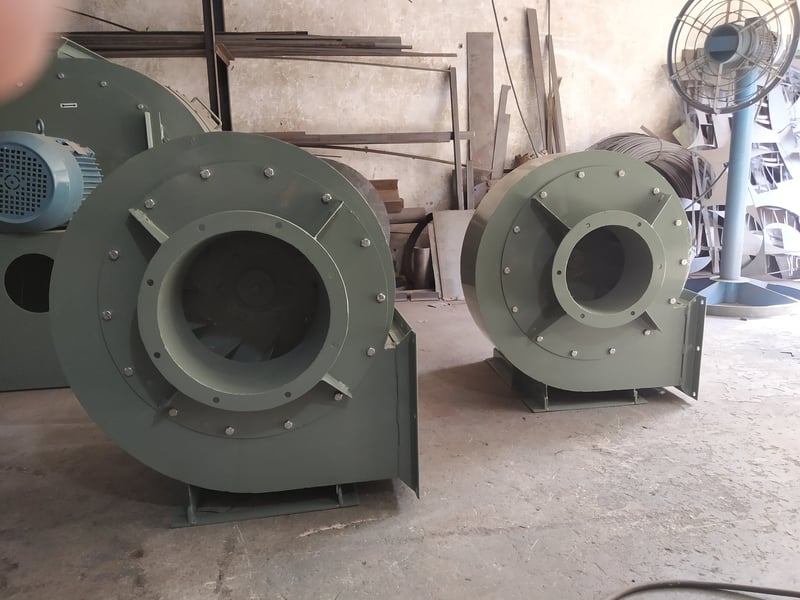
Centrifugal fans (also called radial fans) move air perpendicular to the fan axis. Air enters the fan wheel, turns 90 degrees, and is accelerated radially outward.
Key Features:
- High static pressure capability (up to 3000 Pa)
- Compact design for high-pressure applications
- Better suited for dusty environments
- Can handle higher temperatures
Axial Fans
Axial fans move air parallel to the fan axis. They are ideal for high-volume, low-pressure applications.
Key Features:
- High airflow rates
- Lower pressure development
- More energy-efficient for ventilation
- Simpler construction
When to Use Each Type
Choose Centrifugal Fans when:
- High static pressure is required
- Handling dust-laden air
- Operating at high temperatures
- Space is limited
Choose Axial Fans when:
- High airflow is needed
- Low system resistance
- Simple ventilation applications
- Energy efficiency is priority
Back to Articles
Share: