Furnace Industry
Back to Industries

Furnace Industry

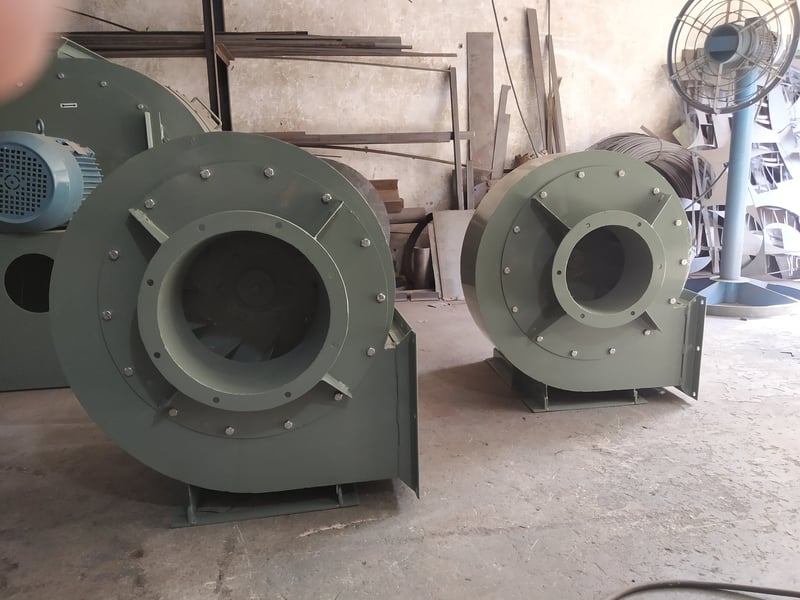
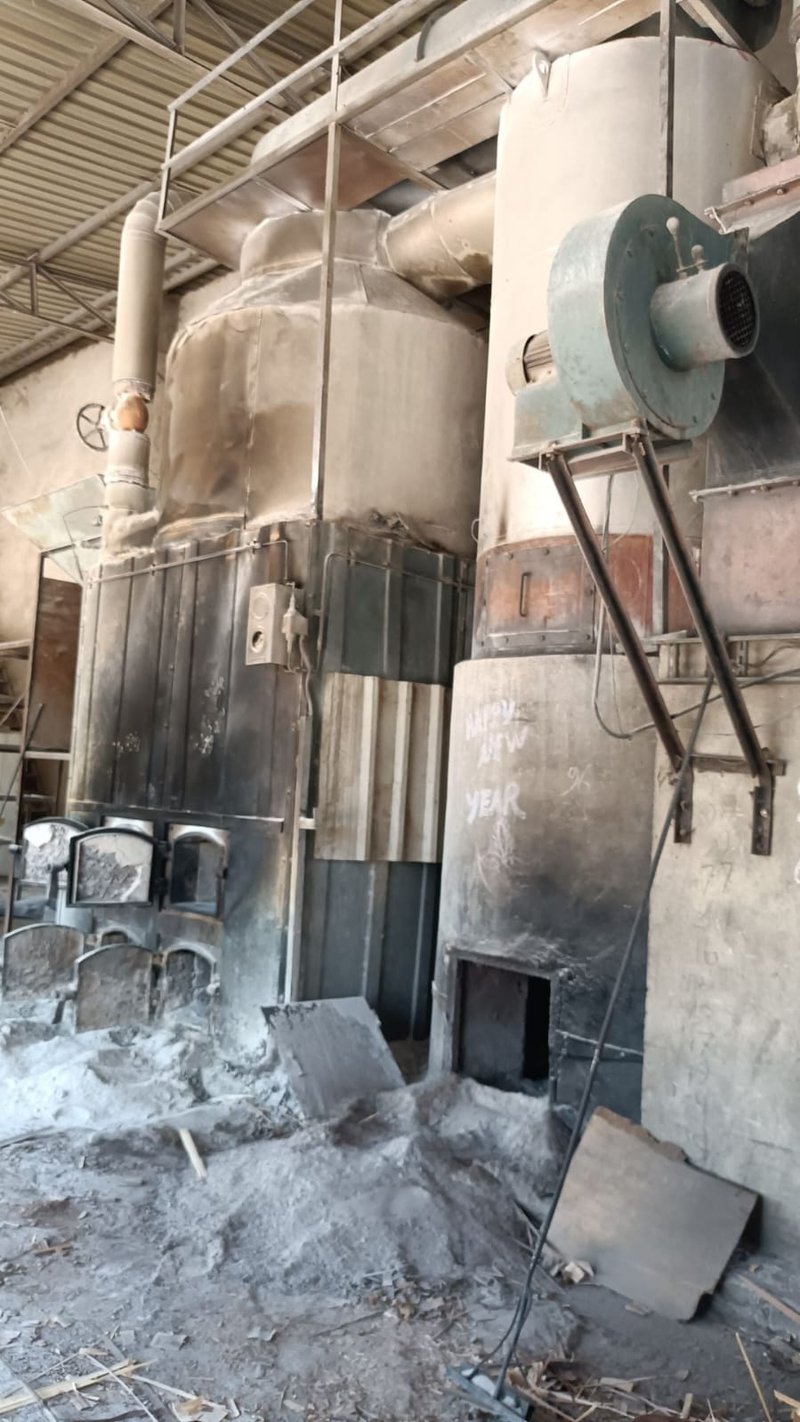
High-temperature fans and combustion systems for industrial furnaces and ovens.

Industry Overview

Furnaces require precise air control for efficient combustion and temperature uniformity. We provide specialized high-temp fans.

Key Challenges

Operating at very high temperatures
Thermal expansion management
Optimizing fuel consumption
Reducing NOx emissions

Market Landscape & Opportunities

Industrial furnaces and ovens represent diverse applications across manufacturing—heat treatment (hardening, tempering, annealing metals), melting (aluminum, copper, zinc, brass), sintering (powder metallurgy, ceramics), drying/curing (coatings, adhesives), and calcining (cement, lime, minerals). Gujarat has 2,000+ industrial furnaces ranging from small batch ovens (1-5 tons) to large rotary kilns (500+ TPD). All furnaces require precisely controlled air systems for: Combustion air supply achieving optimal air-to-fuel ratios (excess air wastes fuel but insufficient air produces CO and soot), exhaust gas extraction maintaining slight negative pressure preventing fume escape, circulation fans distributing heat uniformly throughout chamber (critical for consistent product quality), and cooling systems for rapid quench cycles or operator protection. The furnace industry demands specialized high-temperature fans—materials and bearings rated for sustained 200-500°C operation, thermal expansion provisions, and designs maximizing energy efficiency (fuel costs often 10-20× fan capital cost annually).

Technical Requirements

High temperature operation: Furnace exhaust fans handle 300-800°C gases requiring: Refractory-lined housings insulating external surfaces to <80°C, high-temp bearings (grease rated 200°C+ or oil-bath lubrication), ceramic rope seals vs standard rubber, and water-cooled bearings for extreme duty (>500°C). Expansion joints allowing 80-150mm thermal growth. Combustion air control: Precision combustion requires ±5% airflow stability and ±0.5% O2 control. VFD-controlled fans with oxygen trim (feedback from flue gas O2 sensor auto-adjusting airflow) save 8-18% fuel vs manual operation. Circulation fan design: Batch furnaces need uniform temperature (±5-10°C) requiring high-velocity circulation (15-25 m/sec) and proper plenum design. Impellers rated for 400-600°C continuous service. Atmosphere control: Controlled atmosphere furnaces (carburizing, nitriding, brazing) maintain specific gas composition (e.g., 20% CO, 40% H2, balance N2) within ±2% requiring precision air and gas metering. Pressure control: Maintain -2 to -5 mmWC slight negative pressure preventing furnace atmosphere from leaking (safety—prevents combustible gas release or toxic fume escape).

Our Industry Solutions

We supply specialized furnace air systems engineered for high -temperature reliability. Our heat treatment furnace packages include: Combustion air fans with VFD and O2 trim achieving ±0.3% O2 control saving 12-15% fuel (₹8-15 lakh/year typical), high-temp circulation fans fabricated from heat-resistant alloys with ceramic fiber insulation rated to 650°C continuous operation, exhaust fans with refractory-lined housings and water-cooled bearings handling 450°C gases with <90°C external surface temperature (personnel safety), and fully instrumented control panels with interlocks preventing unsafe operation (e.g., fuel valve opens only if combustion air proven). For an aluminum melting furnace manufacturer, we designed a complete combustion system (40,000 m³/hr air, VFD with O2 trim, motorized dampers for high/low fire) achieving stable 1.5% excess O2 under all loads saving 18% fuel vs previous pneumatic controls—payback 11 months. Our rotary kiln ID fans feature heavy-duty AR500 construction resisting abrasive kiln dust, oversized bearings for reliability, and vibration monitoring with auto-shutdown preventing catastrophic failure.

Industry-Specific FAQs

Frequently Asked Questions

Common Questions About Furnace Industry

Find answers to the most common questions asked by our clients.

Combustion chemistry: Complete fuel combustion requires precise O2 quantity. Methane: CH4 + 2O2 → CO2 + 2H2O. Theoretical air (stoichiometric) provides exact O2 for complete combustion. Practical considerations: Perfect fuel-air mixing impossible in real furnaces—pockets of rich mixture (insufficient O2) produce CO (carbon monoxide, toxic, combustible) and soot (unburned carbon reducing heat transfer). Solution: Supply excess air ensuring all fuel burns completely. Excess air definition: Air supplied beyond theoretical requirement. Example: 10% excess air = 110% of stoichiometric air. Measured by flue gas O2 content: 0% O2 = theoretical air, 2% O2 ≈ 10% excess, 4% O2 ≈ 20% excess. Optimal excess air: Natural gas furnaces: 5-15% excess (1-3% O2). Oil: 10-20% (2-4% O2). Coal: 20-40% (3-6% O2) due to mixing challenges. Energy impact: Each 1% excess air above optimal wastes ~0.6% fuel by heating unnecessary air up flue. 20% excess vs optimal 10% = 6% fuel waste. For furnaceconsuming ₹1 crore/year fuel = ₹6 lakh/year waste! Over 10 years = ₹60 lakh. Insufficient air consequences: CO production (safety—CO is toxic, also represents lost heating value), soot formation (fouls heat exchangers reducing efficiency 5-20%, damages product), reducing atmosphere (can chemically reduce product like metal oxides), opacity (visual stack emissions failing regulations). Control strategy: Install flue gas O2 analyzer continuously measuring exhaust O2. Modulate combustion air fan (VFD or inlet vanes) maintaining target O2 setpoint (e.g., 2.0%) regardless of firing rate or fuel variations. "Oxygen trim" typical payback <2 years from fuel savings.
Materials: Standard fans: Mild steel housing, cast iron impeller, 80-120°C max. High-temp fans: Refractory-lined steel housing (brick lining insulating), heat-resistant alloy impellers (310 stainless, Inconel for extreme duty >650°C), high-temp gaskets (ceramic fiber vs rubber). Bearings: Standard: Grease lubrication rated 120°C max, rubber seals. High-temp: Special high-temp grease (200-250°C rating) or oil-bath lubrication with cooling fins, water-cooled bearing pedestals for >400°C duty (water jacket maintaining bearing at 40-60°C while handling 600°C gas), metal labyrinth seals preventing hot gas reaching bearings. Thermal expansion: Standard fans: Minimal expansion, fixed mounting. High-temp: Expansion joints (bellows or sliding) allowing 50-150mm axial shaft growth, one bearing fixed + one floating (prevents binding), elevated foundations if hot gas can radiate to support structure. Drive: Standard: Direct coupled or V-belt. High-temp: Belt drive with guard preventing belt debris entering hot gas stream, or direct-coupled with thermal barrier insulating motor from radiant heat. Insulation: External insulation (mineral wool, ceramic fiber) reducing surface temperature <80°C preventing burns, reducing heat loss. Instrumentation: Bearing temperature sensors (RTDs) with alarms at 90°C and trips at 110°C preventing bearing failure, casing thermocouples verifying refractory integrity. Cost premium: High-temp construction costs 2-4× standard fan but necessary for reliability—standard fan in 400°C service fails in weeks from bearing seizure, thermal distortion, seal failure.
Poor circulation: Inadequate air velocity (high-velocity jets 15-25 m/sec needed for turbulent mixing, low velocity causes stratification with hot zones near burners, cold zones at extremes). Undersized circulation fans (should provide complete air change every 30-90 seconds). Burner placement: Uneven firing (burners concentrated one side creating hot zones). Single burner in large chamber (cannot distribute heat uniformly). Load blocking: Dense product load obstructing airflow creating shadows. Improper racking (tight spacing preventing air penetration). Furnace leaks: Door seals failed allowing cold air in-leakage around product disrupting temperature. Control issues: Single thermocouple measuring temperature at one point regulating entire furnace (doesn't represent spatial average). Slow-responding controls allowing overshoot/undershoot. Consequences: Product quality variation—heat treatment: non-uniform hardness, drying/curing: some areas under-cured. Longer cycle times (must extend for worst-case cold zone reaching temperature). Energy waste (overheating hot zones compensating for cold zones). Solutions: (1) High-velocity circulation: Dedicated circulation fan (separate from combustion) sized for 800-1,500 CFM per cubic meter furnace volume. Multiple jets directing flow. (2) Zoned firing: Multiple burners with independent control allowing temperature trimming across furnace. (3) Multi-point temperature control: 4-8 thermocouples spatially distributed, controller averaging or controlling to worst-case sensor ensuring all zones meet temperature. (4) Load design: Open racking allowing air penetration between parts. (5) Furnace maintenance: Seal doors/openings preventing leakage. Modern practice: Computational fluid dynamics (CFD) modeling furnace airflow optimizing burner and circulation fan placement before construction.
Direct-fired: Combustion products (CO2, H2O, N2, trace SOx/NOx) contact product directly. Burner fires into chamber, product exposed to flame and flue gas. Advantages: High thermal efficiency (80-90% of fuel energy reaches product), simple construction, lower cost, rapid heating. Disadvantages: Product contamination from combustion products (oxidation of metals, moisture absorption by hygroscopic materials, sulfur deposition from fuel), cannot use for sensitive products (food, pharmaceuticals, certain metal treatments), atmosphere composition fixed by combustion (oxidizing ~1-3% O2). Applications: Heat treatment (hardening, tempering), drying (non-sensitive), melting (where oxidation acceptable), ceramics firing. Indirect-fired (muffle furnace): Product isolated from combustion products in enclosed muffle (chamber). Burners heat muffle externally, radiant/convective heat transfers through muffle wall to product. Advantages: Clean heating (no contamination), controlled atmosphere possible (vacuum, inert, reducing, carburizing), precise control without combustion fluctuations. Disadvantages: Lower efficiency (60-75% due to muffle heat loss), higher cost (muffle construction), slower heating (heat transfer resistance through muffle). Applications: Brazing (must be oxidation-free), sintering powder metals (reducing atmosphere), food processing (no combustion products), laboratory testing, specialty metals. Variations: Radiant tube: Compromise design—burner fires inside tubes immersed in furnace chamber. Tubes heat by radiation, combustion products exhausted separately. Efficiency 70-80%, clean heating, lower cost than full muffle. Selection criteria: Can product tolerate combustion products? Direct-fired = yes, saves money. Requires controlled atmosphere or ultra-clean? Indirect-fired despite higher cost.
Rotary kiln: Large cylindrical steel shell (2-7 meters diameter, 30-200 meters long) lined with refractory, inclined 2-4°, rotating 0.5-3 RPM. Material fed at elevated end travels downhill through kiln as it rotates, discharged at lower end. Heat applied by burner at discharge end (counter-current) or feed end (co-current). Applications: Cement clinker production (limestone → lime + CO2 at 1450°C), lime burning (CaCO3 → CaO + CO2 at 900-1100°C), sponge iron (iron ore + coal → metallic iron at 1000-1200°C), incineration (waste destruction), calcining (alumina, magnesite, titanium). Advantages vs static furnace: Continuous processing (steady feed and discharge vs batch), excellent gas-solid contact (material tumbles exposing fresh surfaces), uniform heating (rotation prevents hot/cold spots), can handle large throughput (100-1,000+ TPD). Air systems: Combustion air: Primary air through burner (coal, gas, oil) for combustion. Secondary air from cooler (preheated to 600-900°C recovering heat from hot product) blowing around burner increasing efficiency. Kiln exhaust: ID (induced draft) fan pulling gases through kiln maintaining -2 to -5 mmWC negative pressure preventing leakage. Gas volume 2,000-15,000 Nm³/ton product. Temperature 250-400°C (after preheater). Dust loading 50-300 g/Nm³ requiring cyclone or ESP. Clinker cooler: Grate cooler uses 1,500-2,500 Nm³/ton air blowing through red-hot clinker (1,200-1,400°C) cooling to 100-200°C. Air heated to 800-1,100°C becomes secondary air or exhausted. Material handling: Dust collection on feed/discharge, pneumatic conveying. Challenges: Seal leakage (air in-leakage or gas out-leakage at kiln ends despite seals), coating buildup (process material sticking to refractory reducing ID/heat transfer), ring formation (material fusing as ring constricting), refractory wear (abrasion, thermal cycling, chemical attack requiring frequent replacement). Fan requirements: High reliability (kiln operates continuously 320+ days/year—shutdown for refractory costs ₹50 lakh-₹2 crore), wear resistance (abrasive dust), high temperature capability.
Principle: Electromagnetic induction heats electrically conductive materials without contact. Mechanism: AC current through copper coil creates alternating magnetic field. Workpiece (metal) placed in field experiences induced eddy currents (from Faraday law of induction). Eddy currents flowing through metal resistance generate resistive heating (I²R losses) raising temperature to 800-1600°C+. Frequency selection: Line frequency (50/60 Hz): For large parts (billets, slabs), deep penetration (50-100mm), melting furnaces 0.5-25 tons, lower power density. Medium frequency (1-10 kHz): General purpose heating, through-hardening, tempering, case depth 2-10mm. High frequency (100-400 kHz): Surface hardening (case depth 0.5-3mm), small parts, rapid heating, brazing. Advantages vs flame/resistance: (1) Precise control: Power adjustable ±1%, temperature repeatable ±5°C enabling consistent treatment. (2) Rapid heating: Concentrated energy (power density 0.5-5 kW/cm²) heats steel to 850°C in 5-30 seconds vs 5-15 minutes in furnace. High throughput. (3) Selective heating: Heats only conductive workpiece + specific depth (surface vs through), surrounding area cool. (4) Clean/safe: No combustion products, no open flame explosion risk, minimal oxidation (fast heating limits air exposure). (5) Energy efficient: 70-90% electrical-to-heat efficiency vs 20-50% in fuel-fired furnaces. Direct heating (no need to heat furnace mass). (6) Compact footprint: Equipment small vs large furnace. Disadvantages: (1) High capital cost (₹15-80 lakh for 100-500 kW system vs ₹5-20 lakh for equivalent gas furnace). (2) High electricity cost (₹5-8/kWh vs gas ₹40-60/Nm³ = ₹4-6/kWh equivalent). (3) Limited to conductive materials (works for steel, copper, aluminum; not for plastics, ceramics, glass). Applications in Gujarat: Automotive gear hardening, shaft hardening, fastener manufacturing, tool/die hardening, aluminum melting, brass melting, steel bar heating before forging. Air handling: Minimal—only localized fume extraction if quenchant (oil) vapors generated during quenching after induction heating. No combustion air, no major exhaust requirements.
Heat treatment: Controlled heating and cooling of metals altering microstructure to achieve desired properties (hardness, strength, ductility, toughness). (1) Hardening/Quenching: Heat steel to 800-900°C (austenite transformation), hold for homogenization (30-60 min depending on section), rapidly cool (quench) in oil/water/polymer transforming austenite to martensite (hard brittle structure). Result: Hardness 55-65 HRC. Applications: Tools, gears, shafts requiring wear resistance. Quenching generates oil mist/fumes requiring extraction. (2) Tempering: Reheat hardened steel to 150-650°C, hold 1-4 hours, slow cool. Reduces brittleness while retaining most hardness, improves toughness. Lower temp = harder but brittle, higher temp = softer but tougher. Applications: All hardened parts to prevent cracking in service. (3) Annealing: Heat to 700-900°C, hold for stress relief and grain refinement, slow cool (in furnace 10-50°C/hr). Softens metal, improves machinability, relieves residual stresses. Applications: Prepare material for machining, restore ductility after cold working. (4) Normalizing: Heat to 850-950°C, hold, cool in still air (faster than annealing, slower than quenching). Refines grain structure, improves mechanical properties uniformity. Applications: Castings, forgings before machining. (5) Carburizing: Heat steel (low carbon 0.1-0.2%) to 900-950°C in carbon-rich atmosphere (endothermic gas: CO+H2) for 4-24 hours. Carbon diffuses into surface (case depth 0.5-2mm, concentration 0.8-1.0%C). Then quench achieving hard wear-resistant surface (60+ HRC) with tough ductile core. Applications: Gears, bearings, shafts. Requires controlled atmosphere furnace with precise gas composition. (6) Nitriding: Heat to 500-550°C in ammonia (NH3) atmosphere for 20-80 hours. Nitrogen diffuses forming hard nitrides (case 0.1-0.6mm, 900-1200 HV). No quench needed, minimal distortion. Applications: Dies, molds, precision components. Batch vs continuous: Batch furnace (elevator/car-bottom): Load parts, run cycle, unload. Flexible (different cycles) but batch efficiency. Continuous furnace (conveyor/pusher-type): Parts continuously fed through heating/soaking/cooling zones. High throughput for mass production (automotive). Atmosphere requirements: Protective atmosphere (N2, endothermic, exothermic gas) prevents oxidation/decarburization during heating ensuring bright finish and maintaining surface carbon. Air handling: Exhaust of spent atmosphere, make-up fresh atmosphere, pressure control preventing air ingress.
Refractory lining life: Rotary kilns: 6 months-5 years depending on duty (cement kiln 1-3 years, sponge iron 6-18 months, lime 2-5 years). Batch furnaces: 3-10 years (heat treating 5-10 years with careful operation, melting 3-7 years). Glass furnaces: 8-15 years (float glass tank rebuilt every 10-15 years, container glass 5-10 years). Failure mechanisms: (1) Thermal cycling: Repeated heating/cooling causes expansion/contraction creating thermal stresses → cracking. Brick spalling (surface layers breaking off). Worst in batch furnaces with frequent startups. (2) Chemical attack: Molten materials (slag in smelting, glass, cement clinker) dissolve refractory at high temp. Acidic slags attack basic refractories (magnesia), basic slags attack acidic refractories (silica). Alkali vapors (sodium, potassium in glass/cement) penetrate brick causing swelling/cracking. (3) Mechanical erosion: Material flow abrades surface. Rotary kiln erosion from tumbling rocks/clinker. Severe at coating rings or tire areas. (4) Thermal shock: Rapid temperature change (cold startup, emergency water quench) causing cracking from differential expansion. Some refractories (high alumina) more shock-resistant than others (magnesia). (5) Structural failure: Improper installation (joints too tight/loose), furnace shell distortion, anchor failure causing lining collapse. Extending life: (1) Proper selection: Match refractory to service conditions—alumina for moderate temp + chemical resistance, magnesia for basic slags, silicon carbide for abrasion + thermal shock. (2) Controlled heating/cooling: Gradual startup (50-150°C/hr max ramp) during commissioning + after relining allowing gradual expansion and curing. Controlled shutdown preventing thermal shock. (3) Maintain coating: Rotary kilns develop protective coating of process material adhering to refractory (insulating + protecting from abrasion). Operating conditions maintaining coating crucial. (4) Minimize thermal cycling: Keep furnace hot during idle periods vs repeated cold starts. (5) Monitor condition: Furnace shell thermocouples monitoring hot spots indicating lining thinning. Require refractory inspection/repair during scheduled maintenance. Reline cost: Batch furnace 20 tons refractory ₹1,500-4,000/ton material + ₹2-6 lakh labor = ₹5-15 lakh total. Rotary kiln 200 tons = ₹30-80 lakh. Shutdown cost ₹5-50 lakh lost production (varies by industry). Planned vs emergency: Planned reline scheduled during low-demand period with materials ready. Emergency failure requires immediate shutdown, scramble sourcing, rushed work (2-3× cost + longer downtime). Preventive monitoring avoids emergency disasters.

Still Have Questions?

Our team is here to help you find the perfect solution for your industrial needs.

Recommended Solutions

Get a Custom Solution

Every facility is unique. Our engineers can design a system tailored to your specific Furnace Industry requirements.

  • Free Site Consultation
  • Custom Engineering
  • Performance Guarantee
Request a Quote

Need immediate assistance?

+91 9099199003