Steel / Metal / Sponge Iron Plants
Back to Industries

Steel / Metal / Sponge Iron Plants

Comprehensive air solutions for steel melting, rolling, and sponge iron kilns.

Industry Overview

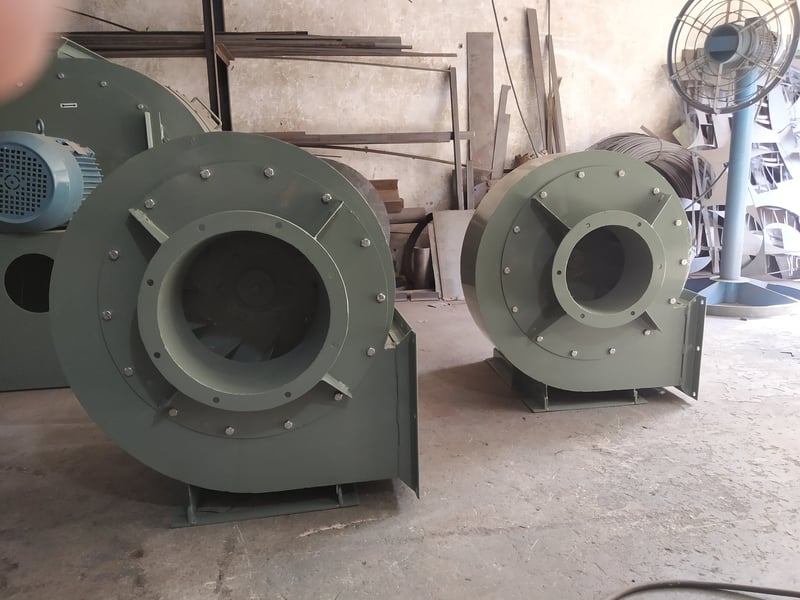
The steel industry is one of the harshest environments for equipment. Our fans and filters are built to survive.

Key Challenges

Extreme heat and dust
Gas cleaning plant (GCP) requirements
Sponge iron kiln off-gases
Scale pit ventilation

Market Landscape & Opportunities

The steel and metal industry is one of India's largest industrial sectors, with Gujarat being a major hub for steel re-rolling mills, sponge iron plants, and metal fabrication units. This industry represents some of the most demanding applications for air handling equipment—extreme temperatures (up to 1600°C in furnaces), highly abrasive metal dust and scale, corrosive acid fumes from pickling operations, and continuous 24/7 operation with zero tolerance for downtime. A typical integrated steel plant requires dozens of specialized fans and pollution control systems: ID fans for reheating furnaces and annealing ovens, fume extraction for electric arc furnaces (EAF) and induction furnaces, dust collection for grinding and shot blasting operations, cooling fans for hot strip mills, and gas cleaning plants (GCP) for sponge iron kilns. At Primeairtech, we have extensive experience supplying heavy-duty fans and APCs specifically engineered for steel industry applications.

Technical Requirements

Temperature extremes: Reheating furnace ID fans handle 350-600°C gases requiring refractory linings and water-cooled bearings. Abrasive duty: Mill scale dust (iron oxide) with hardness 5-6 Mohs causes severe erosion—fans require AR400/500 construction with 12-15mm thick impeller plates. High pressure: Sponge iron kiln fans require 400-600 mmWC to overcome column resistance, demanding robust construction. Corrosive environments: Pickling line fume extraction handles HCl/H2SO4 acid mists requiring FRP or SS316 materials. Large capacities: EAF fume collection 200,000-500,000 m³/hr capturing CO and metal fumes for 50-100 ton furnaces. Gas cleaning plants: Sponge iron off-gas contains CO (20-30%) requiring specialized handling with non-sparking aluminum construction and explosion protection.

Our Industry Solutions

We have supplied complete air systems to 50+ steel plants across Gujarat including mini steel plants, re-rolling mills, and sponge iron units. Our EAF fume extraction packages feature rapid response dampers closing in <2 seconds during tapping to capture 95%+ fumes, water-cooled ductwork handling 900°C initial temperatures, and bag filters with ceramic Nomex bags lasting 18-24 months. Our sponge iron kiln ID fans incorporate special features: non-sparking construction eliminating ignition sources in CO-rich gas, ceramic-lined housings resisting 500°C temperatures, and heavy-duty bearings rated for continuous high-temperature operation. We provided a complete GCP system for a 200 TPD sponge iron plant achieving <50mg/Nm³ emission vs 150mg regulatory limit.

Industry-Specific FAQs

Frequently Asked Questions

Common Questions About Steel / Metal / Sponge Iron Plants

Find answers to the most common questions asked by our clients.

Extreme heat: Reheating furnaces, annealing ovens, and EAFs generate gases at 600-1200°C requiring specialized high-temp fans with refractory protection and water cooling. Metal fume toxicity: Zinc (galvanizing), manganese (ferromanganese), lead (brass), and hexavalent chromium (stainless steel) fumes require 99.5%+ capture efficiency due to severe health hazards. Explosive atmospheres: Sponge iron off-gas contains 20-30% CO creating explosion risk—fans must be non-sparking with proper grounding. Abrasive scale: Mill operations generate iron oxide scale dust that erodes fan components 5-10mm/year without AR steel protection. High capital cost: Large EAF fume systems cost ₹2-5 crore requiring careful economic justification despite regulatory mandates. Downtime sensitivity: Steel production operates continuously—fan failures causing production stops cost ₹50 lakh to ₹2 crore per day necessitating redundancy and rapid maintenance.
Capture method: Direct evacuation (DEG - Direct Evacuation Gun) extracting fumes directly from furnace through water-cooled duct during melting, plus canopy hood capturing fumes during charging and tapping. System components: (1) Water-cooled ductwork: Initial section handles 800-1200°C post-combustion gases, water jackets maintain duct wall <100°C. (2) Evaporative cooler: Water spray cooling reduces gas from 600°C to 200°C before bag filter. (3) Bag filter: High-temp bags (aramid or fiberglass) capture metal oxide fumes to <20mg/Nm³. (4) ID fan: 200,000-400,000 m³/hr at 350-500 mmWC. Control strategy: Dampers modulate extraction rate—high during melt (maximum fume), low during idle, closed during tapping (prevents CO explosion). Capture efficiency: Properly designed DEG systems achieve 90-95% capture vs 70-80% canopy-only systems. Payoff: Recovered metal oxide dust (20-50 kg/ton steel) worth ₹5-15/kg can offset operating costs.
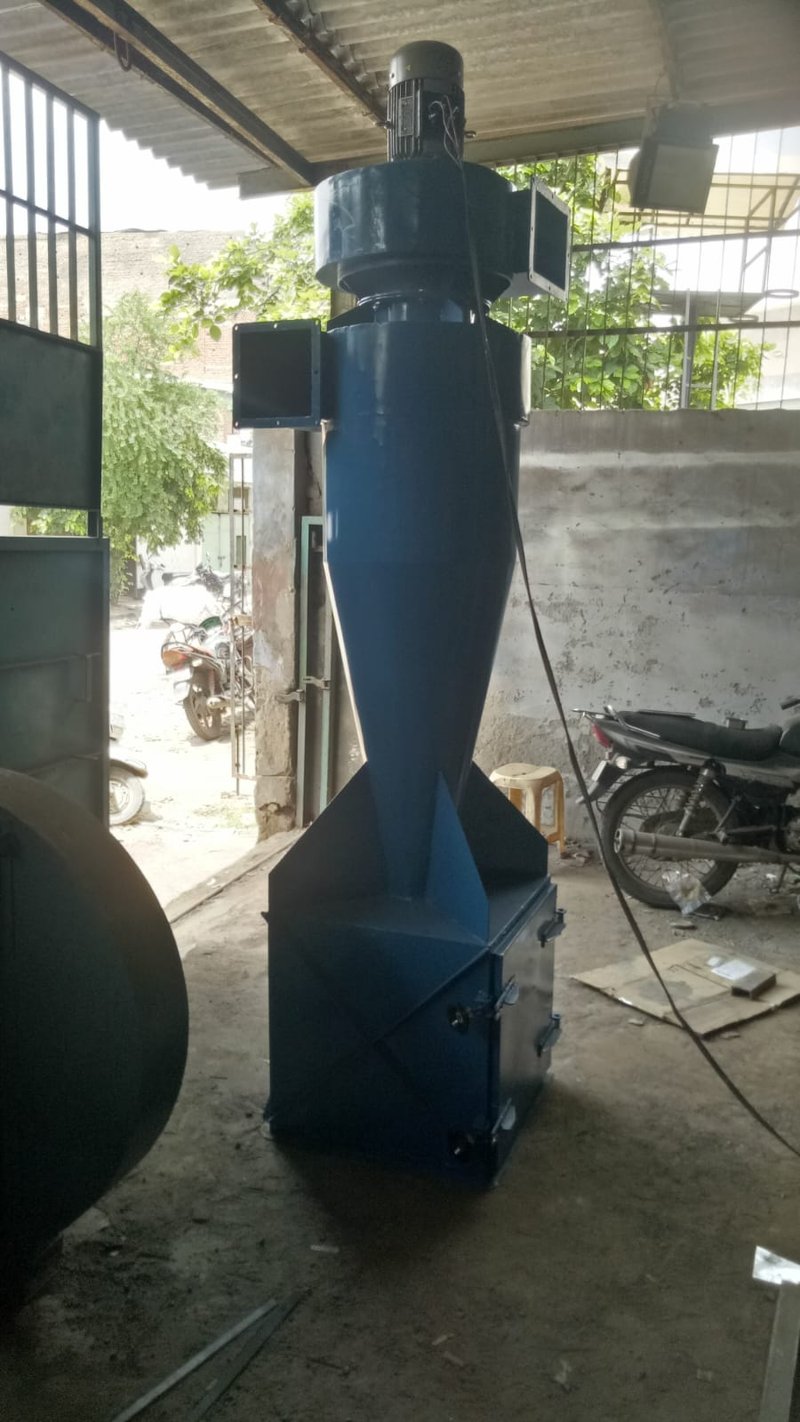
Sponge iron (DRI - Direct Reduced Iron) rotary kilns produce iron from ore using coal/natural gas, generating large volumes of off-gas (8,000-15,000 Nm³/ton DRI) containing: CO (20-30%), CO2 (15-20%), H2 (1-3%), N2 (balance), plus dust (iron/carbon particles). GCP functions: (1) Dust removal: Cyclones + bag filters capturing 50-200 g/Nm³ dust load to <50mg meeting regulations. (2) Cooling: Gas exits kiln at 200-400°C, cooled to 80-120°C for fabric filter compatibility. (3) CO recovery (optional): Clean CO-rich gas can fuel process heating (drying, preheating) saving coal. Equipment: Multi-cyclone pre-cleaner (70-85% efficiency removing coarse dust), evaporative cooler or heat exchanger, pulse-jet bag filter (25,000-80,000 m³/hr), ID fan (300-500 mmWC), stack. Critical design: All equipment must be non-sparking (aluminum/bronze vs steel) preventing CO ignition. Cost: GCP for 200 TPD plant = ₹3-5 crore capital but mandatory for environmental compliance.
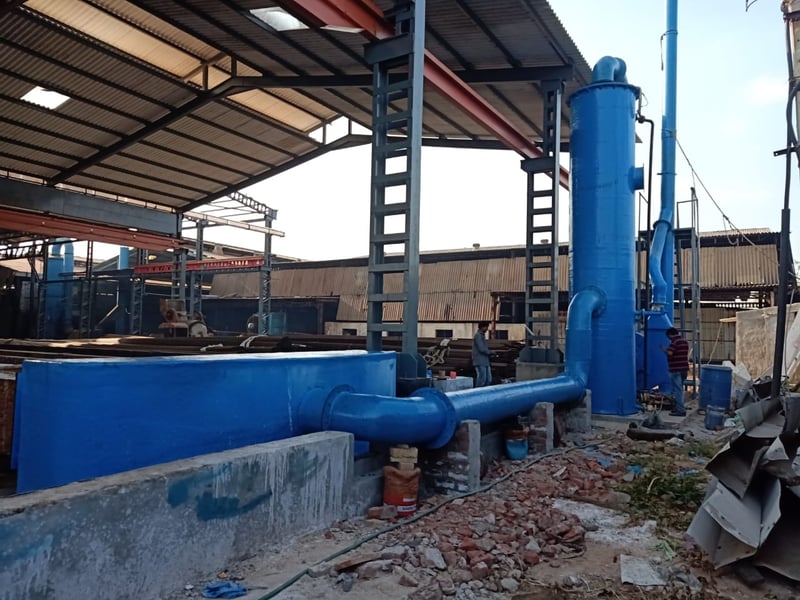
Pickling (acid cleaning) of steel generates HCl or H2SO4 acid mist requiring corrosion-resistant systems: Capture: Enclosed pickling tanks with side-slot extraction pulling acid fumes from tank surface before escaping to atmosphere. Extraction rate 500-2,000 m³/hr per meter tank length. Scrubber system: Cannot use bag filters (acid destroys fabric)—require wet scrubber neutralizing acid. Packed tower scrubber: Acid fumes contact counter-flowing caustic solution (NaOH 2-5%) neutralizing HCl→NaCl+H2O. Packing media (polypropylene balls/saddles) provides contact area. Efficiency 95-99% reducing HCl from 500-2000 mg/Nm³ to <50mg. Materials: Ductwork: PVC or FRP (fiberglass reinforced plastic). Scrubber: PVC or PP (polypropylene). Fan: FRP construction with PP impeller. Maintenance: Weekly: Check caustic pH (maintain 8-10), inspect nozzle spray pattern. Monthly: Clean packing media, verify mist eliminator. Quarterly: Inspect fan for corrosion pitting. Cost: Complete system for 2-tank pickling line (40,000 m³/hr) = ₹25-40 lakh.
EAF principle: Melt steel scrap using electrical arc (3,000-4,000°C) between graphite electrodes and metal charge. Process: (1) Charging: Lower electrodes, open roof, charge scrap basket (60-150 tons) into furnace using overhead crane. Close roof. (2) Melting: Raise electrodes, strike arc (300-600V, 50,000-150,000 amperes!). Arc melts scrap pool forming at bottom, additional scrap continuously added as melt progresses. Oxygen injection (500-2,000 Nm³/heat) burns carbon, silicon, manganese (exothermic oxidation accelerating melting). Power-on time 35-55 minutes depending on scrap quality and transformer power (50-150 MVA typical). (3) Refining: After complete melt, sample chemistry, adjust composition with alloy additions (ferrosilicon, ferromanganese, lime for slag conditioning). (4) Tapping: Tilt furnace, pour molten steel (1,600-1,650°C) into ladle. Tap time 3-8 minutes. (5) Slag-off: After steel tapped, tilt further dumping slag into separate slag pot. Electrical power: Transformer 50-150 MVA (megavolt-amperes) stepping down grid voltage (33-110 kV) to furnace secondary (300-1,000V). Power consumption 350-550 kWh per ton liquid steel. At ₹6/kWh = ₹2,100-3,300/ton energy cost (dominant operating expense). Air pollution control: Primary fume capture: Roof-mounted duct (4th hole) extracting fume directly from furnace during melting. Volume 80,000-250,000 m³/hr, temperature 150-400°C, dust loading 5-30 g/Nm³ (iron oxide, lime, carbon). Secondary fume capture: Building exhaust fans capturing fugitive emissions escaping primary system. Treatment: Cooling + bag filter reducing to <50 mg/Nm³. Advantages EAF vs blast furnace: (1) Uses scrap (cheaper than iron ore), (2) Flexible (on/off as needed vs continuous blast furnace), (3) Lower capital (₹5-15 crore per ton annual capacity vs ₹20-40 crore blast furnace), (4) Suitable small-scale (10,000-500,000 ton/year vs BF minimum 1 million+). Disadvantage: High electricity cost—only viable with cheap power or valuable scrap/alloy steel.
Scrap types: Heavy melt scrap (thick plates, beams, rails—minimal dust), shredded scrap (automobiles, appliances shredded to <12-inch pieces—moderate dust), turnings/borings (machine shop waste—very dusty), foundry returns (high sand content). Dust generation: Scrap handling (loading, conveyor transfer, magnetic crane lifting/dropping) creates impact releasing adherent dirt, rust, coatings (paint, zinc from galvanized), sand from casting scrap. Uncontrolled scrap yard: 50-500 mg/m³ dust in immediate area. Health hazards: Lead (from painted scrap, battery scrap), cadmium (electroplating), hexavalent chromium (stainless steel), manganese (alloy steel), silica (sand in foundry returns). Fire risk: Oil-soaked turnings ignited by cutting torch fires, spreads rapidly. EAF charging fume: Dropping scrap basket into hot furnace (1,200-1,500°C residual heat from previous heat) vaporizes surface contaminants creating massive fume plume (10,000-50,000 mg/Nm³!) exhausting from furnace openings (door, roof gap). Without capture, fills building with dense smoke. Dust control strategies: (1) Water spray suppression: Spray scrap pile, conveyor transfer points with mist (10-50 micron droplets) knocking down dust 60-85%. Simple, low capital (₹2-8 lakh), but contaminated runoff requires treatment. (2) Enclosed transfer + extraction: Cover scrap conveyor/chute, extract with fan (20,000-80,000 CFM), bag filter. Expensive (₹40 lakh-₹2 crore) but 95%+ capture. (3) Building exhaust: High bay exhaust fans (total 200,000-500,000 CFM) diluting fugitive dust keeping <5 mg/m³ worker exposure. (4) Good housekeeping: Minimize drop heights (reduces impact energy and dust generation), regular vacuum cleaning (industrial HEPA vacs), paved surfaces vs dirt yards. EAF primary fume hood: Capture at source immediately above charging point extracting smoke plume before dispersing. Critical for compliance and worker health.
Ladle function: Refractory-lined steel vessel (15-200 ton capacity) receiving molten steel from furnace (EAF, BOF, LRF), transporting to caster or secondary metallurgy (LRF, vacuum degassing). Problem with cold ladle: Steel tapped at 1,580-1,650°C into cold ladle (ambient 25°C, refractory thermal mass ~5-30 tons) causes: (1) Severe temperature drop: 30-80°C drop (varies by ladle size, tapping time, steel mass). 1,620°C steel drops to 1,550°C after tap. (2) Skull formation: Steel freezing on cold refractory forming skull (solidified layer) reducing ladle capacity, contaminating next heat. (3) Refractory thermal shock: Rapid heating causing cracking, spalling, premature lining failure (refractory life reduced 60-80 heats vs 120-180 with preheat). (4) Casting problems: If steel temperature drops below liquidus (1,510-1,530°C typical), premature solidification in tundish/mold causing breakouts (molten steel bursting through solidified shell—catastrophic). Preheating solution: Heat ladle to 900-1,200°C before tapping using ladle preheater (burner firing into ladle). Burner types: (1) Direct-fired burner: Natural gas/LPG burner (1-5 million kcal/hr) inserted into ladle opening firing against refractory. Preheat time 4-10 hours (cold ladle) or 1-2 hours (warm ladle from previous heat). (2) Oxy-fuel burner: Higher flame temperature (2,800°C vs 1,900°C air-fuel) reducing preheat time 50%. But requires oxygen supply. Combustion air: Burner requires 8-15 Nm³ air per Nm³ natural gas. 2 million kcal/hr burner = 200 Nm³/hr gas × 12 = 2,400 Nm³/hr air = 2,900 m³/hr at ambient. Blower delivering 3,000-4,000 m³/hr at 50-150 mmWC pressure. Exhaust: Hot combustion products (1,400-1,600°C) exhausting from ladle top. Requires overhead hood (5,000-15,000 m³/hr extraction) capturing for worker safety. Benefits of preheating: (1) Minimize temperature loss (<15°C drop with 1,100°C preheat vs 60°C cold), (2) No skull formation, (3) Refractory life 2-3× longer (saves ₹5-20 lakh per reline), (4) Casting temperature control ensuring quality, (5) Productivity (prevents heat delays from temperature issues). Cost: Ladle preheater burner + blower + hood = ₹8-25 lakh. Fuel cost ₹500-2,000 per preheat. But refractory savings + quality benefits justify easily.

Still Have Questions?

Our team is here to help you find the perfect solution for your industrial needs.

Recommended Solutions

Get a Custom Solution

Every facility is unique. Our engineers can design a system tailored to your specific Steel / Metal / Sponge Iron Plants requirements.

  • Free Site Consultation
  • Custom Engineering
  • Performance Guarantee
Request a Quote

Need immediate assistance?

+91 9099199003