Food Processing Plants
Back to Industries

Food Processing Plants

Hygienic and efficient air handling for drying, cooling, and pneumatic conveying in the food industry.

Industry Overview

Food processing requires strict hygiene and precise environmental control. Our solutions help maintain product quality while ensuring safety.

Key Challenges

Contamination control
Moisture and humidity control
Dust explosion prevention
Clean-in-place (CIP) requirements

Market Landscape & Opportunities

Food processing is Gujarat's fastest-growing manufacturing sector encompassing dairy, snacks, spices grinding, flour milling, biscuit/bakery, frozen foods, and beverage production. This industry demands the highest hygiene standards for air handling equipment—stainless steel construction, sanitary design preventing bacterial growth, easy cleaning (CIP compatible), and explosion protection for combustible food dusts. Typical applications include pneumatic conveying of flour/sugar/spices (requiring food-grade SS304 construction), spray drying for milk powder and instant coffee (high-volume air at precise temperature/humidity), dust collection in spice grinding and packaging (ATEX-compliant for combustion risk), and cold room ventilation maintaining 0-4°C for frozen storage. Our food-grade air systems meet FSSAI, FDA, and BRC standards.

Technical Requirements

Material compliance: All product-contact surfaces SS304 minimum (SS316 for corrosive ingredients), FDA-approved lubricants, food-grade gaskets/seals. Sanitary design: Crevice-free construction, smooth 150-grit polish on product surfaces, 15° minimum slope on hoppers preventing accumulation, easy disassembly for cleaning. Dust explosion protection: Flour, sugar, starch, milk powder, spice dusts are combustible—require ATEX Zone 21/22 equipment with explosion venting, suppression, or containment. Temperature control: Spray dryers require ±2°C air temperature control affecting product moisture. Humidity control: Hygroscopic products (sugar, salt) need <40% RH air preventing caking. Capacity precision: Pneumatic conveying requires accurate CFM control maintaining conveying velocity 18-25 m/sec—too high damages product, too low causes line blockage.

Our Industry Solutions

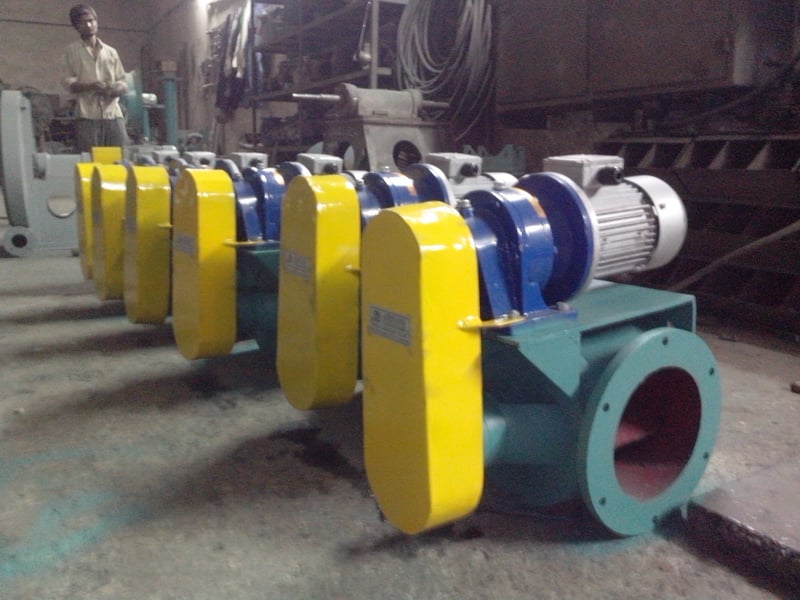
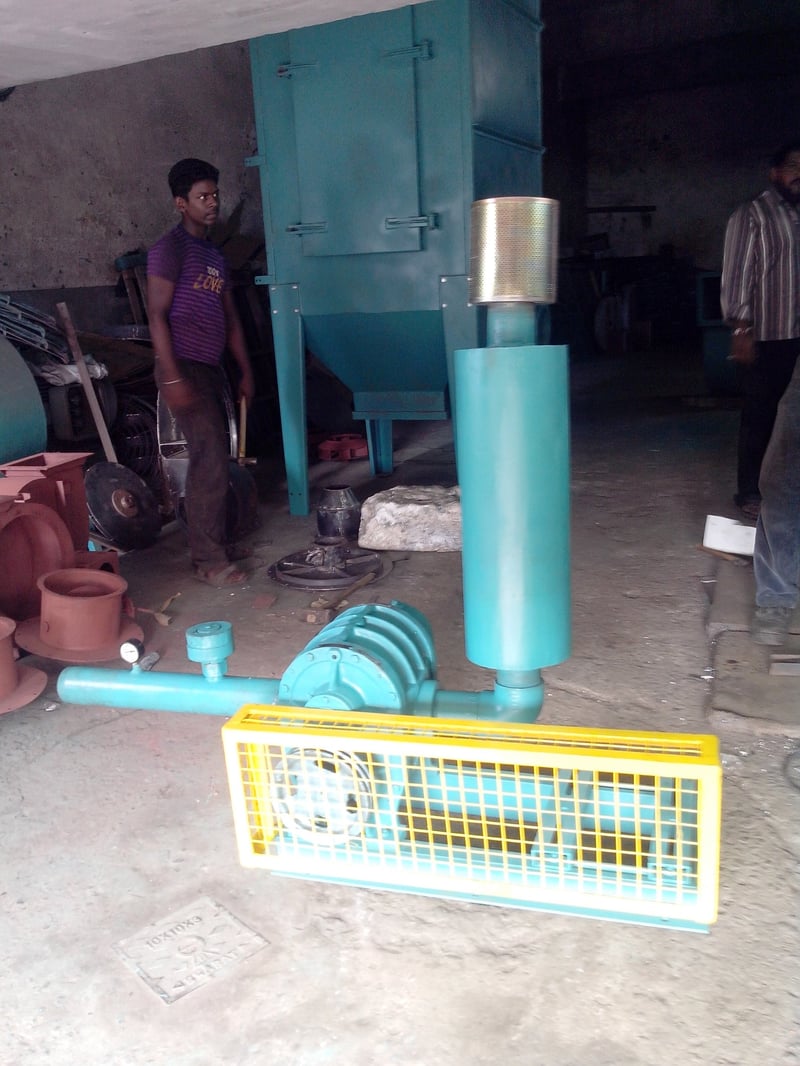
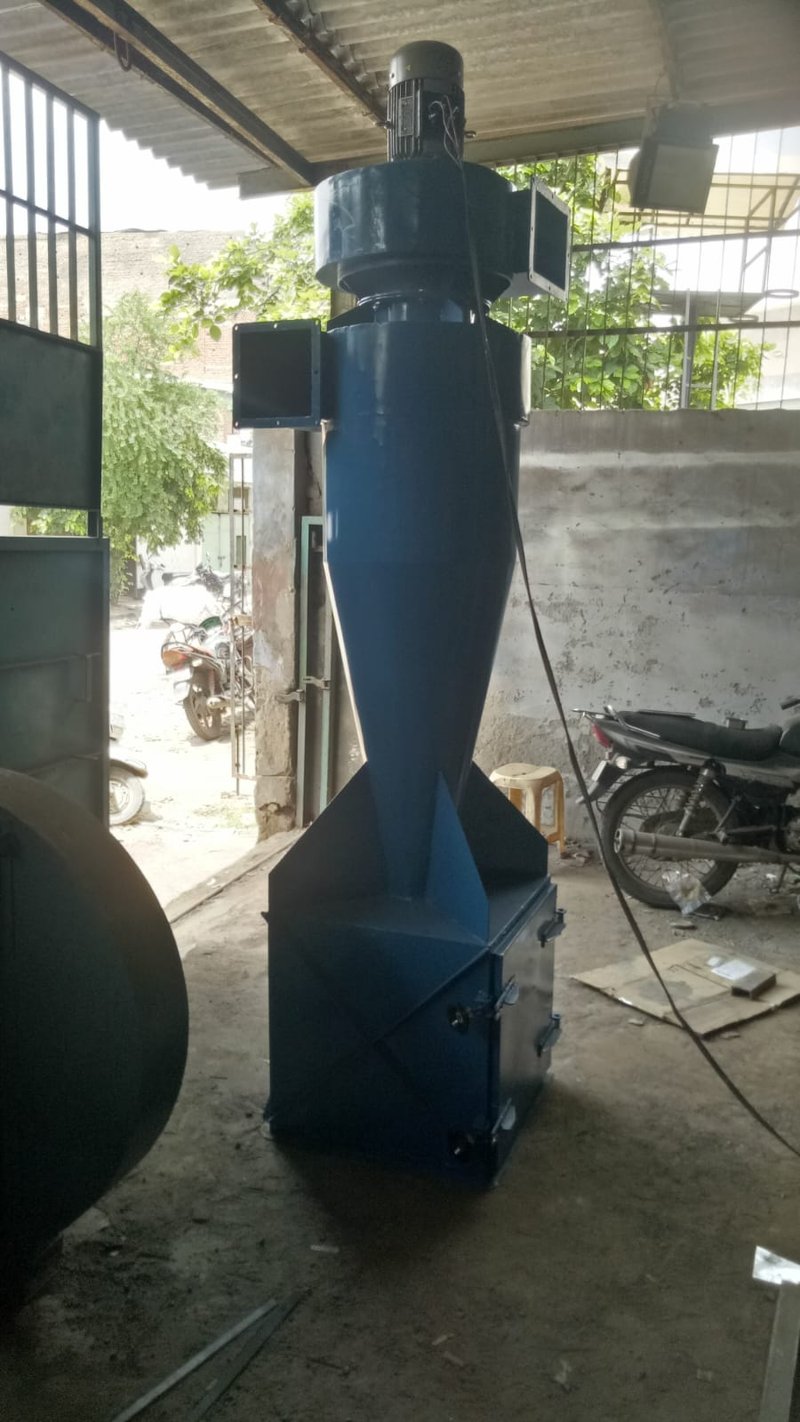
We supply complete food-grade air systems to 30+ food processing plants. Our flour pneumatic conveying systems feature SS304 roots blowers with ceramic-coated rotors (no metal-to-metal contact avoiding contamination), rotary airlocks with clear acrylic inspection doors (visual foreign object detection), and explosion-vented receivers with HRD flameless vents (protecting building structure). For a major biscuit manufacturer, we provided a 12,000 CFM flour handling system achieving zero contamination incidents over 3 years while meeting ATEX certification. Our spice grinding dust collectors incorporate spark detection and chemical suppression systems preventing 5 potential dust explosions in a turmeric plant (detected and suppressed in <50 milliseconds). We understand that food safety is non-negotiable and design accordingly.

Industry-Specific FAQs

Frequently Asked Questions

Common Questions About Food Processing Plants

Find answers to the most common questions asked by our clients.

Contamination prevention: Mild steel (MS) rusts when exposed to moisture in food products or during washdown, releasing iron oxide particles contaminating product. Bacterial growth: Rust pits and surface roughness on MS provide harboring sites for bacteria like Salmonella, Listeria, E.coli that cannot be cleaned adequately. Chemical resistance: Many food ingredients are mildly acidic (citric acid, vinegar, tomatoes) or alkaline (baking soda) corroding MS but not SS. Cleanability: SS304 with 150-grit polish creates smooth, crevice-free surface that can be thoroughly cleaned, sanitized, and inspected. Regulatory compliance: FSSAI (Food Safety Standards Authority of India), FDA, BRC Global Standards all mandate SS for direct food contact equipment. Cost justification: SS costs 3-4× MS initially BUT: (1) Eliminates product rejections from contamination (single batch rejection costs more than SS upgrade), (2) Passes food safety audits (failing audit = customer loss), (3) Lasts 15-20 years vs 3-5 years MS in food environment. Always use SS304 minimum, SS316 for acidic products (citrus processing, vinegar) or salt exposure (pickles, marinades).
Combustible food dusts: Flour, sugar, starch, milk powder, cocoa, coffee, rice husk, tea dust, spices (turmeric most dangerous), dried egg, soy protein—all burn explosively when dispersed as dust cloud. Explosion conditions: (1) Fuel (food dust), (2) Oxygen (air), (3) Ignition (spark, friction, static, hot surface >250-400°C depending on product), (4) Dispersion (dust cloud >50 g/m³ in air), (5) Confinement (enclosed ductwork/collector). Explosion severity: Pmax (maximum pressure) 6-10 bar, Kst (deflagration index) 100-300 bar-m/sec classifying most food dusts St-1 or St-2 explosion class. Real incidents: Imperial Sugar Georgia 2008: 14 deaths from sugar dust explosion. Multiple flour mill explosions in India. Protection methods: (1) Explosion venting: Rupture panels releasing pressure <0.1 second before reaching destructive levels. (2) Suppression: Sensors detect pressure rise, trigger chemical agent injection extinguishing flame in <50 milliseconds. (3) Spark detection: Infrared sensors in ducts detect hot particles, divert to catch bin or water quench. (4) Proper grounding: Bonding all equipment preventing static discharge (>100 mJ ignites most food dusts). Cost: Explosion venting ₹50,000-3 lakh per vent. Suppression system ₹8-15 lakh. But one explosion causes ₹5-50 crore damage plus fatalities—protection is mandatory.
Dilute phase (lean phase) conveying: High velocity (18-30 m/sec) suspending particles in air stream. Material-to-air ratio 1-10:1 (kg material per kg air). Suitable for non-friable products. Dense phase conveying: Low velocity (<15 m/sec), high pressure (400-1000 mmWC), material moves as plugs or dunes. Ratio 15-50:1. Gentle on fragile products like flakes, minimizes product degradation. System components: (1) Feeding device: Rotary airlock valve or venturi eductor introducing material into airstream. (2) Conveying line: SS pipeline with long-radius bends (R>5×D avoiding product breakage), sloped 15-30° draining condensation. (3) Receiver: Product disengages from air via cyclone separator or filter receiver. (4) Blower: Roots blower for dense phase (constant volume regardless pressure), centrifugal fan for dilute phase. Design factors: Flour conveying (fragile): Dense phase at 12 m/sec minimizing particle damage. Sugar (abrasive granules): Dilute phase acceptable, use thick-wall pipe (Sch 40) resisting erosion. Spices (sticky): Higher velocity overpowering electrostatic adhesion. Benefits vs mechanical: No moving parts in product stream (hygienic), can route complex 3D paths, enclosed system preventing contamination, lower maintenance. Drawbacks: Product degradation from high velocity impacts, higher power consumption.
Process: Convert liquid feed (milk, coffee extract, juice concentrate, egg, flavors) into dry powder by atomization in hot air stream. Steps: (1) Atomization: Pump liquid through nozzle (pressure nozzle 100-300 bar or rotary atomizer 10,000-30,000 RPM) creating fine droplets 10-200 µm diameter. (2) Hot air contact: Droplets meet hot air (150-250°C inlet temp) in drying chamber causing instant water evaporation. (3) Particle formation: As water evaporates, solids concentrate forming hollow sphere/particle. Drying time 5-30 seconds. (4) Separation: Dried powder separates from exhaust air via cyclone (85-95% efficiency) + bag filter (>99%). (5) Cooling: Powder cooled to 25-35°C before packaging preventing moisture re-absorption. Air system requirements: Supply air: 3,000-15,000 kg air per kg evaporated water. Milk powder dryer evaporating 1,000 kg/hr water = 5,000-10,000 kg/hr air = 4,000-8,000 m³/hr. Heated to 150-250°C via natural gas/LPG burner or steam heat exchanger. Exhaust air: Exit 70-90°C, 10-20% RH. Cyclone removes bulk powder, bag filter polishes to <50 mg/Nm³. Temperature control ±2°C critical affecting product moisture (target 2-5% for milk powder). Product quality factors: Inlet temp too high → product degradation (scorching, nutrient loss, off-flavor). Too low → sticky powder, poor flowability. Atomization uniformity affects particle size distribution (narrow = better instant properties). Energy consumption: 4,000-6,000 kJ per kg water evaporated (vs 2,800 kJ theoretical) due to sensible heat losses. Cost: Complete spray dryer 1,000 kg/hr milk powder capacity = ₹8-15 crore capital. Operating cost ₹25-40/kg powder (60-70% fuel, 20% power, 10% maintenance).
Cold chain: Temperature-controlled supply chain maintaining product at 0-8°C (chilled dairy, meat, vegetables) or -18 to -25°C (frozen foods) from production through distribution preventing spoilage. Cold room ventilation challenges: (1) Temperature maintenance: Ventilation introduces warm outside air (35-45°C ambient Gujarat summer) requiring massive refrigeration to cool. Each m³/hr outdoor air = 15-30 kcal/hr cooling load. 10,000 m³/hr ventilation = 150,000-300,000 kcal/hr = 175-350 kW refrigeration! (2) Moisture infiltration: Outside air at 45°C, 40% RH contains 25 g/kg moisture. Cooled to 2°C condenses as frost on evaporator coils reducing efficiency, requiring frequent defrost cycles. (3) Pressure control: Cold room must maintain slight positive pressure (+5 to +10 Pa) preventing warm humid air infiltration when doors open. But excessive ventilation wastes energy. Solution: Recirculation with minimum fresh air. Design: Recirculate 80-95% of air, 5-20% fresh air for odor dilution and O2 replenishment (respiring produce consumes O2, generates CO2 and ethylene). Air change rate: Storage room: 2-6 ACH. Processing room with workers: 15-25 ACH. Evaporator design: Low air velocity (1.5-2.5 m/sec coil face) minimizing product moisture loss. Large evaporator surface area (low ΔT = 4-8°C vs 10-15°C standard) reducing frosting. Door protection: (1) Air curtains: Downward high-velocity air jet (8-12 m/sec) at doorway preventing warm air entry when open. Saves 40-70% infiltration vs no curtain. (2) Strip curtains: Overlapping PVC strips allowing passage but blocking air. (3) Rapid-roll doors: Open/close <3 seconds minimizing open time. Humidity control: Dehumidification (cooling coil condensing moisture) maintaining 75-85% RH for produce (preventing shriveling) or 55-65% RH for frozen (preventing ice crystal growth on product). Energy impact: Cold storage consumes 30-60 kWh/ton-month. Proper ventilation design saves 20-40%.
Critical pathogens: Listeria monocytogenes (survives refrigeration, causes listeriosis—20-30% mortality), Salmonella (poultry, eggs, cross-contamination), E. coli O157:H7 (meat, produce), Campylobacter. Air handling role in pathogen control: (1) Positive pressure: Processing rooms maintained +15 to +25 Pa vs non-production areas preventing contaminated air infiltration. Air flows from clean → less clean preventing backflow. (2) HEPA filtration: Supply air passed through H13 HEPA removing >99.95% of bacteria-carrying particles entering production zones. Critical for ready-to-eat (RTE) foods (sliced meat, cheese, salads) consumed without cooking. (3) Humidity control: Maintain <70% RH preventing condensation. Water droplets on ceiling/walls/equipment drip onto product causing microbial contamination. Listeria thrives in wet environments (drains, condensate). (4) Air velocity: Adequate air movement (0.2-0.5 m/sec) preventing stagnant zones where spores settle and multiply. But excessive velocity (>2 m/sec) creates turbulence dispersing contaminants. (5) Directional airflow: Flow from RTE (clean) toward raw (dirty) zones preventing cross-contamination. Never raw → RTE flow. Sanitation practices: Daily: Wet cleaning (detergent + sanitizer), all surfaces including ceiling, walls, equipment, drains. Dry thoroughly (standing water = Listeria habitat). Deep cleaning: Monthly disassembly of equipment, clean-in-place (CIP) for piping, ATP swab testing verifying <100 RLU (Relative Light Units) indicating cleanliness. Environmental monitoring: Weekly swab sampling of food-contact surfaces, monthly air sampling (settle plates detecting airborne bacteria), quarterly testing of non-contact zones (floors, drains, AC ducts). Corrective actions: Any positive Listeria test triggers: Stop production, deep sanitation, retest, root cause investigation, preventive measures. Design considerations: Coved corners (no 90° joints where bacteria hide), sloped floors (2% grade to drains), smooth SS304 walls (no porous materials like wood/cardboard), sealed penetrations. Regulatory: FSSAI mandates environmental monitoring in RTE facilities. Failure to control pathogens = product recalls, plant shutdown, criminal liability if outbreak causes deaths.
CIP definition: Automated cleaning of process equipment (tanks, pipes, heat exchangers, fillers) without disassembly using chemical solutions circulated through system. Alternative to manual cleaning (labor-intensive, inconsistent, exposure hazard). CIP cycle steps: (1) Pre-rinse: Water flush (5-10 min) removing gross soil (product residues, loose particles) to drain. (2) Caustic wash: Hot (70-85°C) alkaline solution (NaOH 1-3%) circulating 15-30 min dissolving fats, proteins, carbohydrates. Flow velocity >1.5 m/sec creating turbulence scrubbing surfaces. (3) Intermediate rinse: Water rinse removing caustic and dissolved soil. (4) Acid wash: Acidic solution (HNO3 or citric acid 1-2%) removing mineral deposits (milk stone in dairy), scale. 10-20 min circulation. (5) Final rinse: Water until conductivity <200 µS/cm and pH 6-8 ensuring no chemical residues. (6) Optional sanitization: Hot water (>85°C) or chemical sanitizer (chlorine, PAA) if bacterial kill required before next run. CIP system components: Supply tank: Holds water, caustic, acid. Heat exchanger: Heating solutions to setpoint. Pump: Centrifugal pump generating required flow (spray balls need 10-100 L/min depending on size). Valves: Automated divert valves routing solution through equipment being cleaned. Return loop: Recovered solution returned to tank for reuse (caustic/acid reused 3-5 cycles before disposal, saving chemicals). Spray devices: Spray balls (static or rotating) distributing solution 360° inside tanks covering all surfaces. Validation: ATP testing after CIP showing <100 RLU (clean), microbiological swabs showing <10 CFU/cm² (sanitary), conductivity/pH confirming rinse completeness. Air handling connection: CIP generates hot humid vapors (80-95°C steam during hot rinse) requiring ventilation (2,000-10,000 CFM depending on equipment size) preventing condensation damage to electronics/insulation. Benefits: Consistent cleaning (vs variable manual), labor savings (3-5 operators reduced to 1 supervisor), faster turnaround (2-4 hr CIP vs 8-12 hr manual), safety (no confined space entry, no caustic exposure), water savings (30-50% vs manual). Cost: CIP system for 5,000L tank = ₹8-18 lakh but payback <2 years from labor savings + reduced downtime.
Major allergens: Milk, eggs, fish, crustaceans, tree nuts, peanuts, wheat, soy (\"Big 8\" causing 90% of allergic reactions). Even trace amounts (<1 ppm for some individuals) trigger reactions—anaphylaxis can be fatal. Cross-contact routes: (1) Shared equipment: Processing peanut butter then jelly on same line without adequate cleaning leaves peanut residue contaminating jelly. (2) Airborne dust: Milk powder dust from packaging line settling on equipment in adjacent area. (3) Personnel: Worker handling wheat dough transferring flour on gloves/clothing to allergen-free zone. (4) Ventilation: Air from nut-processing area recirculated to allergen-free zone carrying airborne particles. Air handling controls: (1) Dedicated air systems: Allergen zones (nut room, dairy room) have separate AHU, 100% exhaust (no recirculation), negative pressure -10 to -15 Pa vs non-allergen areas preventing escape. (2) Airlocks: Entry/exit to allergen zones through pressurized airlocks with sticky mats and garment change preventing carryout on shoes/clothing. (3) Filtration: If recirculation unavoidable, HEPA filters (>99.97%) on return air capturing allergen particles. (4) Directional flow: Air flows from allergen-free → allergen zones (never reverse). Production scheduling: Allergen products last in day→ full cleaning →allergen-free products first next day minimizing cross-contact. Or campaign production (week of peanut products, then changeover). Cleaning validation: Swab testing of equipment after cleaning showing <5 ppm allergen (or lower ELISA detection limit). Allergen test kits (lateral flow, ELISA) verify specific proteins (peanut Ara h1, milk casein). Labeling: \"Contains: peanuts\" (ingredient) or \"May contain: peanuts\" (cross-contact risk despite controls). Failure to label + cross-contact = recalls, lawsuits, brand damage. Example incident: Bakery failed to clean mixer between peanut cookies and plain cookies. Child with peanut allergy ate plain cookie (contained 15 ppm peanut protein from residue) → anaphylaxis, hospitalization. Company recalled 50,000 units, paid ₹1.5 crore lawsuit, lost major retail contract. Allergen management is life-or-death serious.

Still Have Questions?

Our team is here to help you find the perfect solution for your industrial needs.

Recommended Solutions

Get a Custom Solution

Every facility is unique. Our engineers can design a system tailored to your specific Food Processing Plants requirements.

  • Free Site Consultation
  • Custom Engineering
  • Performance Guarantee
Request a Quote

Need immediate assistance?

+91 9099199003