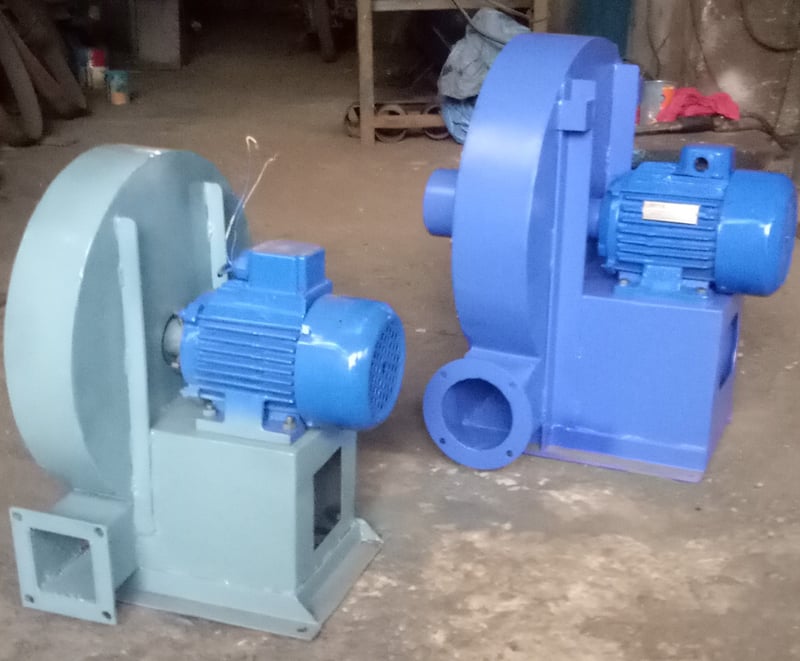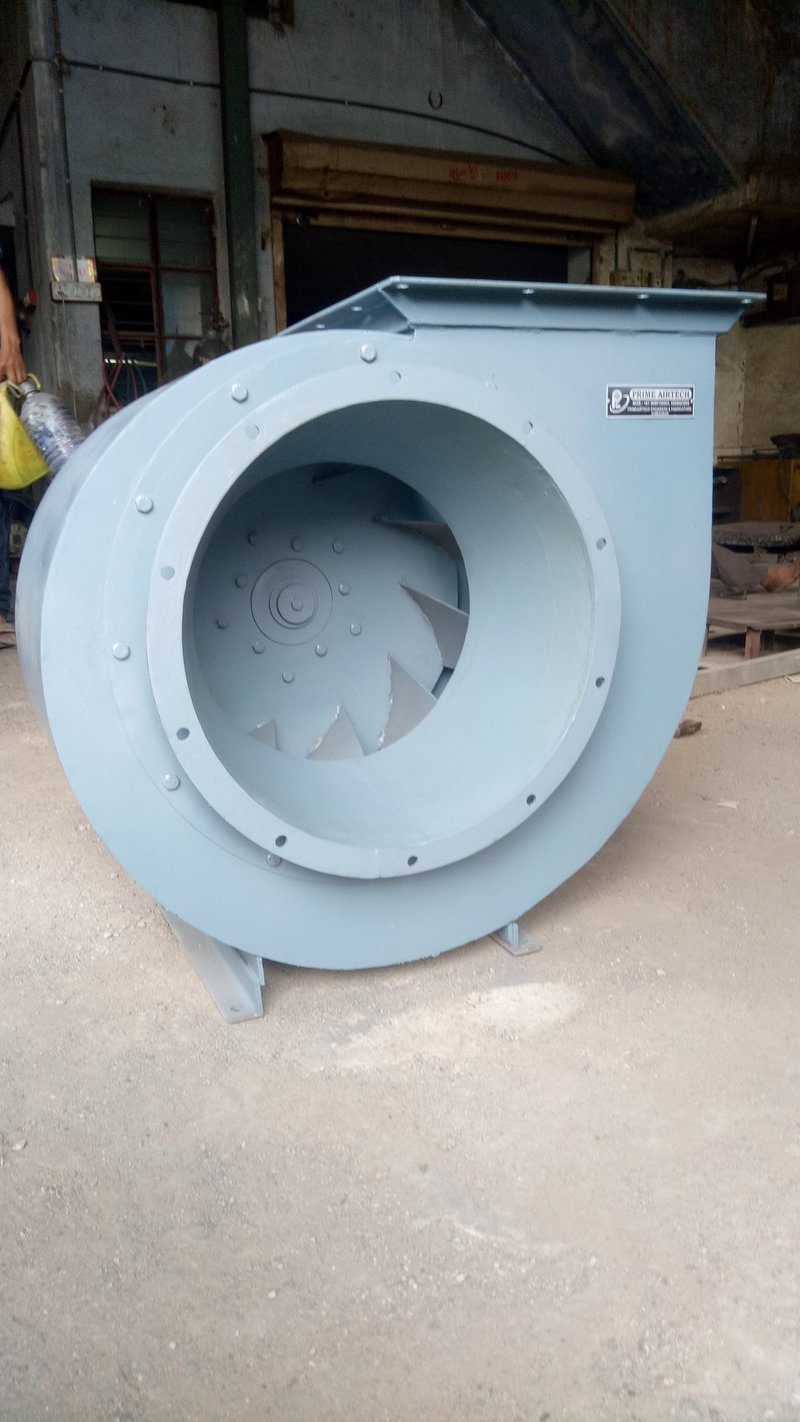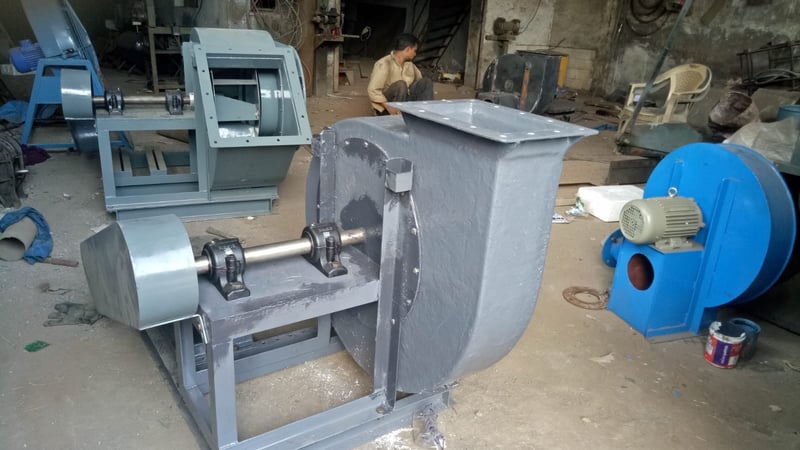
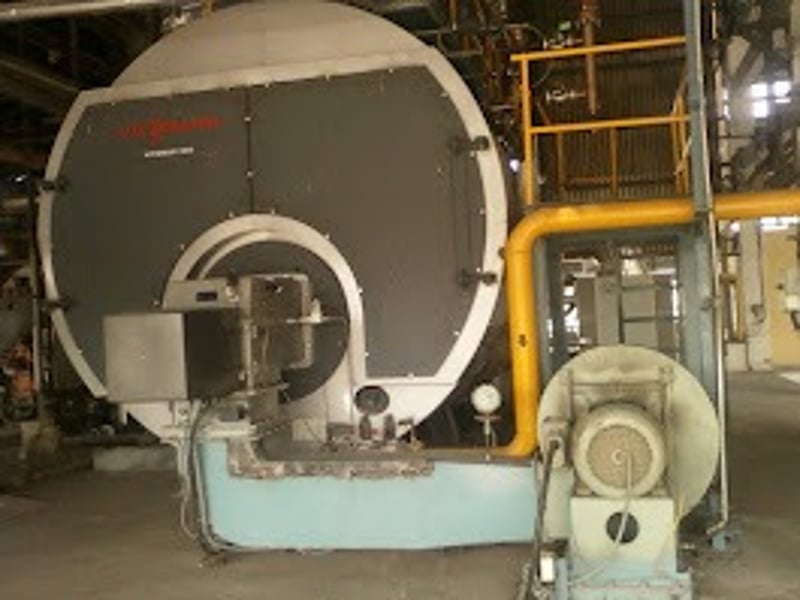
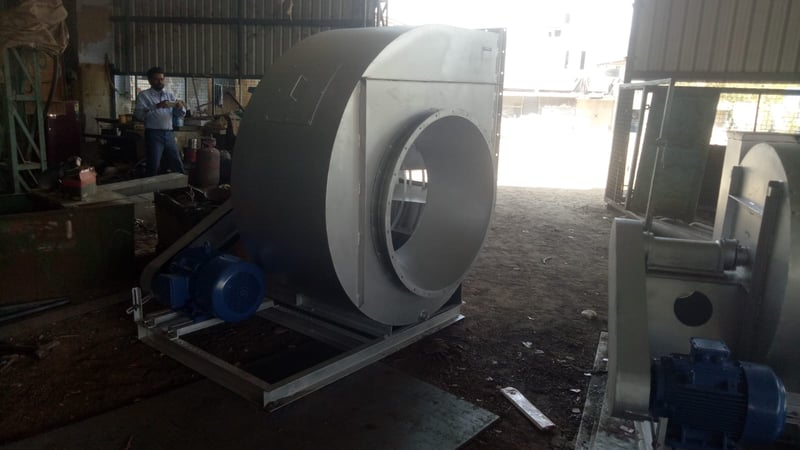
Low Pressure Blowers
Gallery 0
Gallery 1
Gallery 2
Gallery 3
Gallery 4

Low Pressure Blowers

Industrial Grade High Efficiency Quality Tested

Ideal for ventilation, cooling, and exhaust systems where high volume air movement is needed at low pressure.

Key Features

  • Large air volume capacity
  • Energy efficient
  • Direct or belt driven
  • Quiet operation
  • Customizable options

Pricing & Quote

Get customized pricing based on your exact specifications. Our team provides competitive quotes within 2-4 hours.

Custom Pricing Quick Response Best Rates

Technical Specifications

Material Stainless Steel / Mild Steel / FRP
Capacity Customizable up to 100,000 CFM
Pressure Up to 1500 mmWG
Temperature Up to 450°C
Drive Type Direct / Belt / Coupling
Efficiency Up to 85%

* Specifications may vary based on custom requirements. Contact our engineering team for precise data.

Industrial Applications

HVAC Systems
Industrial Ventilation
Cooling Towers
General Air Movement

Low Pressure Blowers Price & Cost Information

The price of Low Pressure Blowers varies based on multiple factors including specifications, capacity, materials, and customization requirements. At Primeairtech, we provide competitive pricing tailored to your exact industrial needs.

Factors Affecting Low Pressure Blowers Pricing:

  • Capacity & CFM Rating: Higher airflow capacity requires larger motors and impellers, affecting cost
  • Material of Construction: Mild steel, stainless steel, or FRP options at different price points
  • Pressure Requirements: High-pressure variants require reinforced construction
  • Drive Type: Direct drive, belt drive, or coupling arrangements
  • Special Features: VFD integration, high-temperature tolerance, explosion-proof variants
  • Installation & Commissioning: On-site support and training services

Get Accurate Low Pressure Blowers Price Quote

For the most accurate pricing on Low Pressure Blowers, we recommend contacting our sales team with your specific requirements. We provide detailed quotations with:

  • Competitive market rates guaranteed
  • Detailed cost breakdown included
  • Quick response within 2-4 hours
  • Technical consultation at no extra cost
Frequently Asked Questions

Common Questions About Low Pressure Blowers

Find answers to the most common questions asked by our clients.

Low pressure blowers typically operate in the range of 0-100 mmWC (0-4 inches WC) static pressure. These blowers are designed for high-volume air movement with minimal system resistance, rather than overcoming significant back-pressure. Applications include simple ventilation systems, air circulation, cooling, and exhaust where ductwork is short and direct with few bends or filters. Unlike high-pressure blowers which fight against resistance, low-pressure blowers excel at moving large volumes of air efficiently when resistance is minimal. If your system has extensive ductwork, multiple filters, or long runs, you need medium or high-pressure blowers instead.
Low pressure blowers are available from 1,000 CFM up to 150,000+ CFM depending on size and configuration. Small units (1,000-5,000 CFM) suit localized ventilation, spot cooling, or small exhaust applications. Medium capacity (5,000-25,000 CFM) handles warehouse ventilation, manufacturing floor air circulation, and moderate-sized exhaust systems. Large units (25,000-150,000+ CFM) serve massive warehouses, large assembly plants, commercial buildings, and industrial facilities requiring substantial air turnover. The key advantage of low-pressure designs is delivering very high CFM economically - a low-pressure blower costs 30-40% less than equivalent CFM high-pressure unit and consumes 20-30% less energy when system resistance is minimal.
Common applications include: General warehouse ventilation (air changes without complex ductwork), Spot cooling (directing airflow at specific work areas or equipment), Simple exhaust systems (short, direct exhaust without filters), Air curtains (doorway air barriers in commercial buildings), Drying processes (agricultural products, paint drying where gentle airflow needed), Makeup air systems (replacing exhausted air in buildings), Cooling tower fans (moving air through cooling tower fill), and HVAC fresh air intake (bringing outdoor air into building HVAC systems). These applications share minimal ducting and low system resistance characteristics.
Key differences: Pressure capability: Low-pressure 0-100 mmWC vs high-pressure 100-1500+ mmWC. Impeller design: Low-pressure uses shallow, wide impellers optimized for volume; high-pressure uses deep, narrow impellers for pressure generation. Motor power: For same CFM, low-pressure requires 30-50% less motor HP due to lower resistance. Cost: Low-pressure costs 30-40% less for equivalent airflow. Efficiency at design point: Both can be efficient, but low-pressure loses efficiency quickly if system resistance increases. Applications: Low-pressure for simple, open systems; high-pressure for complex ductwork, filters, long runs, material conveying. Choose based on your system total static pressure calculation.
Generally NOT recommended for conventional dust collection systems. Dust collection requires overcoming filter resistance (50-150 mmWC when loaded), duct friction losses, and hood entry losses - typically totaling 100-200+ mmWC, exceeding low-pressure blower capability. Using undersized low-pressure blower results in inadequate airflow, poor dust capture, and filter malfunction. Exception: Very localized dust pickup with direct discharge (no filters) and minimal ductwork might work with low-pressure design. For proper dust collection with bag filters or cartridge filters, specify medium-pressure (100-400 mmWC) or high-pressure blowers depending on system size. Our engineers can calculate your exact system resistance to recommend appropriate pressure class.
Maintenance schedule: Weekly: Visual inspection for unusual noise or vibration, check belt tension if belt-driven (should deflect 10-15mm under finger pressure). Monthly: Clean/replace inlet screens or filters, lubricate bearings if grease fittings present (2-3 grease gun pumps NLGI Grade 2), verify all mounting bolts tight. Quarterly: Detailed vibration measurement (should be below 4.5 mm/sec RMS), motor current check, inspect belts for wear/cracking, clean impeller if dust buildup visible. Annually: Bearing replacement (preventive for 24/7 operations), motor insulation test (megger test), belt replacement, complete alignment check. Low-pressure blowers generally require less frequent maintenance than high-pressure units due to lower operating stresses.
Troubleshooting steps in order of likelihood: (1) Blocked inlet screen/filter - most common cause. Clean or replace immediately. (2) Wrong rotation direction - reduces flow 60-80%. Verify rotation matches arrow on housing. (3) Dampers partially closed - check all dampers fully open. (4) Slipping V-belts (if belt-driven) - check tension, replace if worn. (5) Ductwork obstruction - birds nests, collapsed duct sections, closed backdraft dampers. (6) System resistance higher than design - additions/modifications since installation. (7) Motor speed lower than nameplate - measure with tachometer, verify power supply voltage. (8) Impeller wear/damage - inspect for corrosion, missing blade pieces. Contact our service team for professional troubleshooting if issues persist.
Belt Drive Advantages: Lower initial cost, easy speed adjustment via pulley changes, shock absorption protecting motor and bearings, simpler motor replacement, better for variable speed needs. Belt Drive Disadvantages: 3-5% efficiency loss through belt slippage, annual belt replacement costs ₹2,000-8,000 depending on size, requires regular tension adjustment, slightly higher noise levels. Direct Drive Advantages: 3-5% higher efficiency = energy savings (significant for 24/7 operation), zero belt maintenance, quieter operation, more compact footprint, better for continuous duty. Direct Drive Disadvantages: Fixed speed without VFD, higher initial investment, motor replacement more complex. Recommendation: For low-pressure applications running continuously (10+ hours/day), direct drive saves energy costs justifying higher initial price. For intermittent use or variable speed needs, belt drive offers flexibility at lower cost.
Noise levels depend heavily on size and operating speed: Small blowers (1,000-5,000 CFM): 65-75 dB at 3 meters. Medium blowers (5,000-25,000 CFM): 75-85 dB at 3 meters. Large blowers (25,000+ CFM): 85-95 dB at 3 meters. These are typical levels; actual noise depends on installation, speed, and inlet/outlet conditions. Noise reduction strategies: Install acoustic silencers at inlet/outlet (reduces 10-20 dB), mount on vibration isolators, use flexible duct connections, enclose in acoustic housing, reduce operating speed via VFD (10% speed reduction = approximately 3 dB noise reduction). For noise-sensitive environments (offices, residential areas), specify maximum acceptable dB level and we'll design accordingly with silencers, lower operating speeds, or special low-noise impeller designs.
Absolutely yes, and highly recommended for variable load applications. VFD (Variable Frequency Drive) benefits for low-pressure blowers: Energy savings: Massive savings following fan cube law - reducing speed 20% saves approximately 50% power. For a 50 HP blower running 4,000 hours/year, 20% speed reduction saves ₹2,00,000+ annually in electricity. Soft start: Gradual acceleration reduces mechanical stress, extends bearing/belt life. Precise control: Adjust airflow to match actual needs rather than damper throttling. Reduced noise: Lower speeds = quieter operation. Considerations: Ensure motor is inverter-duty rated or standard 3-phase induction (most are compatible), install at minimum 40% speed to maintain adequate motor cooling, properly size VFD reactor and cable based on motor HP. VFD investment typically pays back in 6-18 months through energy savings alone on variable-load applications.

Still Have Questions?

Our team is here to help you find the perfect solution for your industrial needs.

Related Products
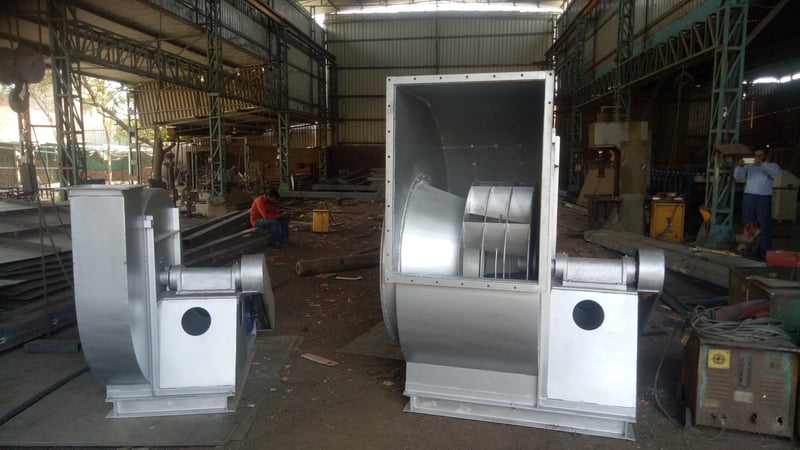
Need a Custom Solution?

Our engineering team specializes in customizing Low Pressure Blowers to meet your exact specifications and constraints.

Contact Our Engineers