Back to Industries
Glass Manufacturing
Reliable cooling and combustion air systems for continuous glass melting and forming processes.
Reliable cooling and combustion air systems for continuous glass melting and forming processes.
Glass manufacturing is an energy-intensive continuous process. Air systems play a vital role in furnace operation and product cooling.
Glass manufacturing is a continuous, energy-intensive process requiring 24/7 operation for months or even years without shutdown (furnace refractory life 5-15 years). Gujarat has 150+ glass plants producing flat glass (windows, automobiles), container glass (bottles, jars), fiberglass, and specialty glass (optical, laboratory). The process involves melting raw materials (silica sand, soda ash, limestone) at 1400-1600°C in massive furnaces, forming the molten glass through various processes (float, blow, draw), and controlled cooling (annealing) to relieve internal stresses. Air handling is critical at every stage: combustion air for furnaces burning natural gas or furnace oil, cooling air for formed glass (bottles at 500-600°C must cool to <100°C without thermal shock causing cracks), exhaust ventilation removing radiant heat from working areas (maintaining tolerable temperatures for workers), and pollution control capturing particulate matter and acid gases (HF, HCl from batch reactions). A single float glass line (400 TPD) requires 1.5-2.5 MW of fan power across all systems.
Combustion air systems: Precise air-to-fuel ratio control (excess air 5-15%) for furnace efficiency. Typical glass furnace: 100,000-300,000 Nm³/hr combustion air at ambient conditions, requiring FD fans 120,000-350,000 m³/hr. Regenerative furnaces use waste heat recovery achieving 60-70% thermal efficiency. Flue gas handling: 1400-1600°C exhaust requires refractory-lined ductwork, cooling to 400-600°C before ESP or bag filter. ID fans handle 150,000-400,000 m³/hr at 150-250 mmWC. Product cooling: Annealing lehrs require controlled cooling—too fast causes residual stress (breakage), too slow reduces production. Cooling air 50,000-200,000 m³/hr maintaining precise temperature profiles (±5°C). Container glass: rapid cooling stations (25,000-100,000 CFM per line) transitioning from 500°C to 100°C in 30-90 seconds. Workspace cooling: Radiant heat from furnaces and molten glass creates extreme conditions—roof exhaust fans (100,000-500,000 CFM) plus evaporative cooling or spot cooling maintaining areas <35°C. Emission control: Particulates (batch carryover) and acid gases (HF from fluoride flux) require ESP or scrubbers achieving <50 mg/Nm³ and pH control.
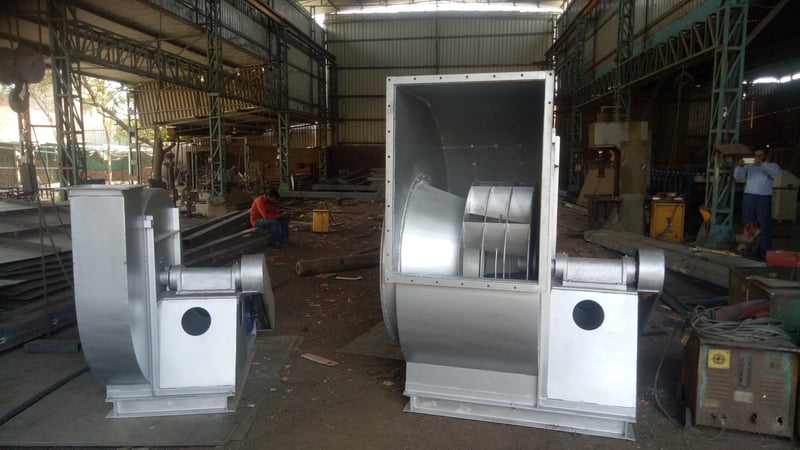
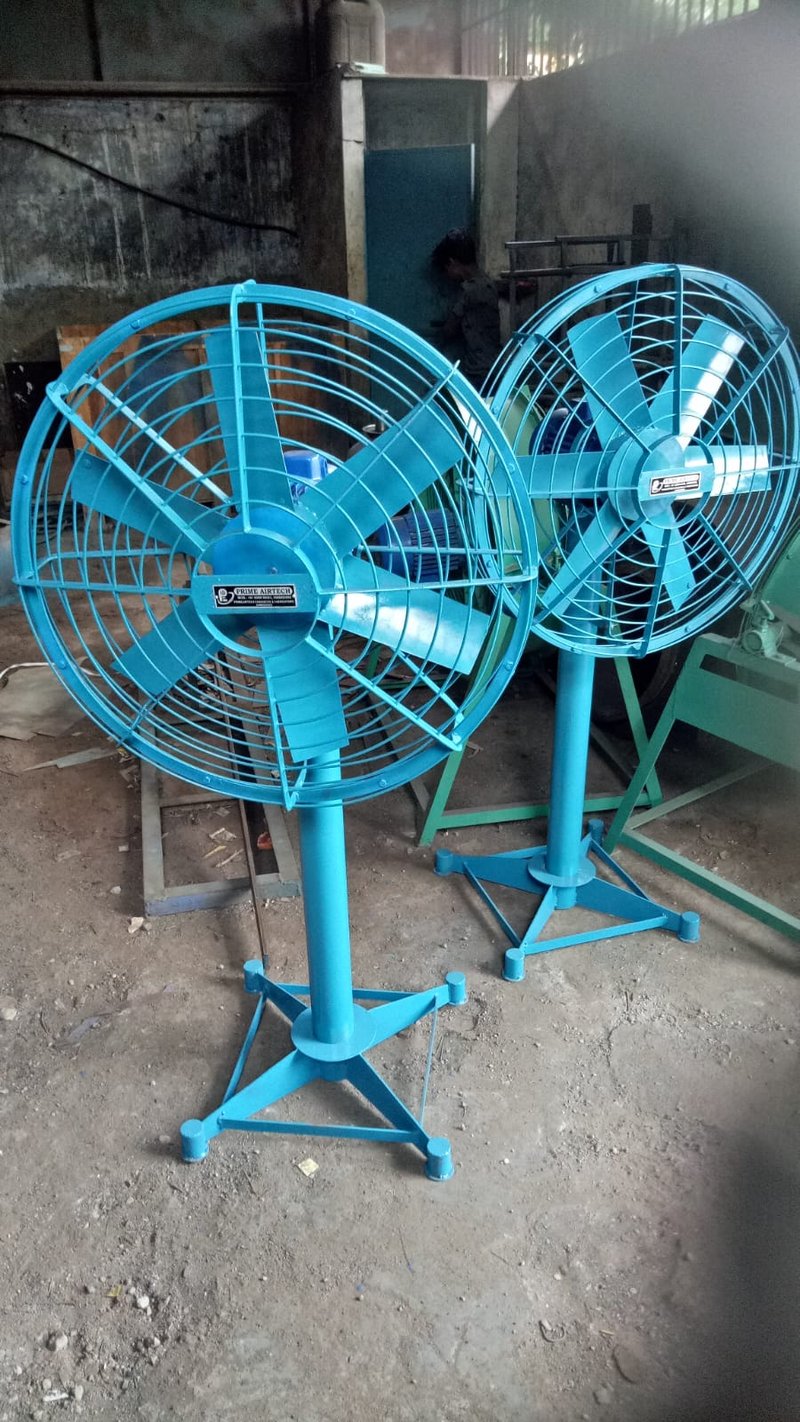
We supply air systems for glass manufacturing with emphasis on reliability (unplanned shutdown of continuous process costs ₹50 lakh to ₹2 crore per day). Our container glass cooling systems feature: Multiple centrifugal fans in redundant configuration (N+1 ensuring production continues if one fan fails), precision VFD control maintaining ±3% airflow stability critical for consistent product quality, stainless steel construction resisting corrosive environment, and comprehensive monitoring (flow, pressure, temperature, vibration) with automated alarms. For a bottle manufacturing plant, we provided 8 cooling fans (2 per production line, 35,000 CFM each) with automatic switchover—achieved 99.8% availability over 5 years with zero production stops due to fan failure. Our furnace combustion air packages include precision oxygen trim control systems modulating air supply based on real-time flue gas O2 measurement, saving 8-12% fuel vs manual control. We understand that in continuous glass production, reliability is everything—our systems are designed for 24/7/365 operation.
Find answers to the most common questions asked by our clients.
Our team is here to help you find the perfect solution for your industrial needs.
Every facility is unique. Our engineers can design a system tailored to your specific Glass Manufacturing requirements.
Need immediate assistance?
+91 9099199003Technical Assistant
Hello! I'm your Primeairtech technical assistant. I can help you with product specifications, industry solutions, and technical queries. How may I assist you today?